
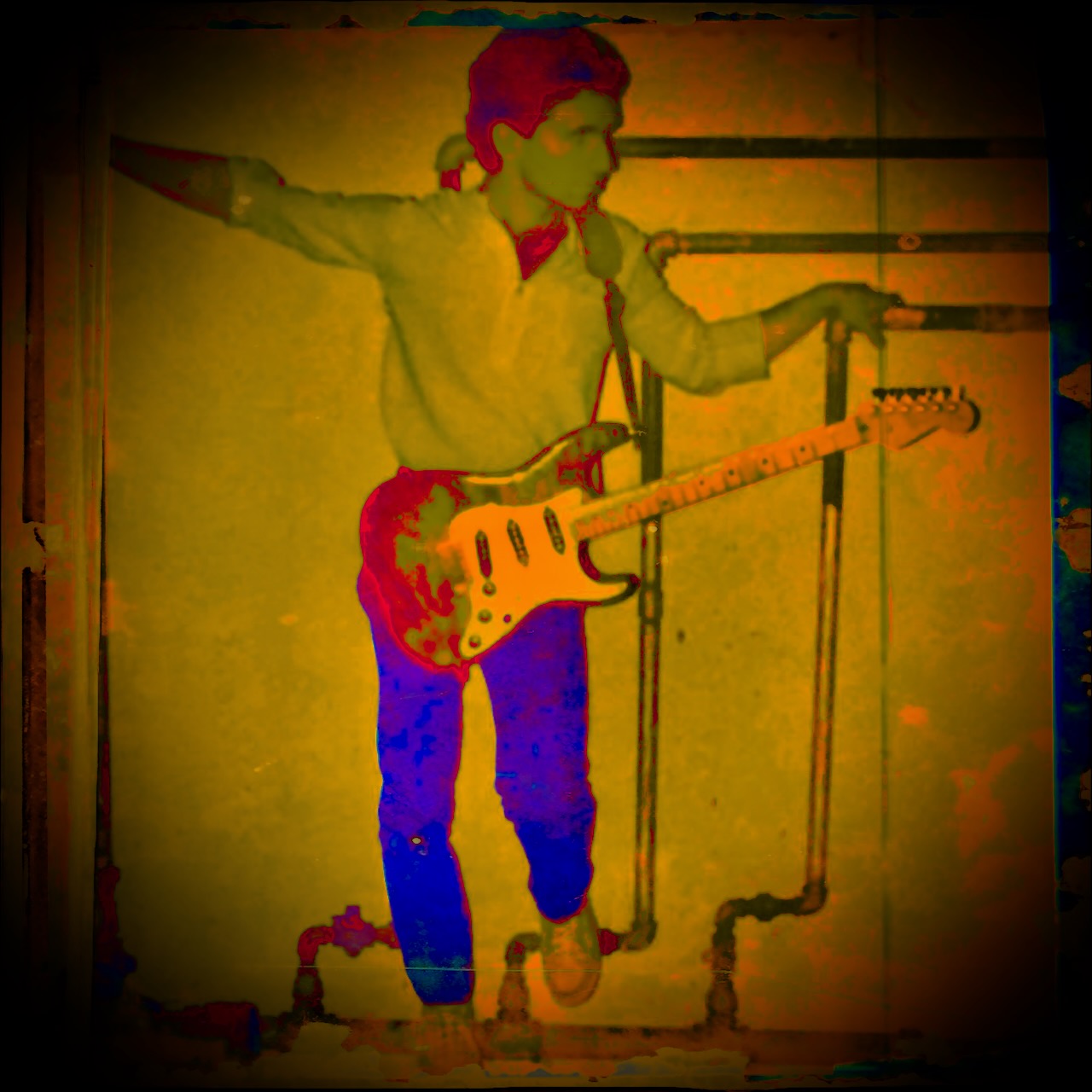
25 Jan The Road Crew – Part Six
A bit late, perhaps, Gentle Reader(s), but here at last is Part Six of the TRC saga. I’ve been somewhat distracted of late, I will admit, by the distressing state of both world and national affairs and it requires some effort to restrain myself from spending half the day poring over the newspapers (I typically peruse five no less than five). Here, perhaps, is a bit of welcome distraction for both of us. Chapter Six steps aside, briefly, from the Cretins tour schedule for some philosophical musings on the road life and the penurious state of Ink’s affairs at home in the Dook City. I hope you enjoy and please, don’t just look at the damn Contact page (I can actually tell when you’ve been looking!) and use the damn thing to tell me that I am delusional and should hang up this misguided project forthwith. Or otherwise. I await with bated breath. Check back in a couple of weeks for Part Seven.
Six
The downsides of life on the road constituted a shifting array of day-to-day complaints, compromises, inconveniences and minor insults to comfort and dignity. Taken individually, most were fairly inconsequential but they were cumulative and the longer we were out on the road the more they piled up and the more magnetic and magical the concept of ‘home’ became.
The litany of gripes of the touring life probably hadn’t changed substantially since touring had begun (Note to self: When had touring begun?) and, for me at least, there was a romance to the endeavor that went some distance towards easing the monotony and the grind. The notion of the Cretins road crew as inheritors of a proud tradition of jongleurs, itinerant troubadours and roving guitar slingers was an appealing one. A fantasy perhaps, but appealing nonetheless.
On occasion the fantasy merged with reality and we were able to transcend our mundane concerns and worldly grievances and, through our collective efforts, attain a state of grace. When the band was onstage and the Magic was fully upon us, when the stars were in alignment and the cosmic ethers and bodily humors were in balance, you could feel the moment when the abstractions and the divisions dissolved away and everything was in sync. Sometimes it happened, sometimes it didn’t, but when it did it felt pretty fucking amazing, even from the obscure gloom of my dark lurkage behind the Goof’s Marshalls.
Sometimes the momentum built steadily over the course of a good set as the band gradually, steadily, won the audience over to its cause—whatever that might be. By the final couple of songs everything would be topping out and the band would run offstage leaving the audience screaming its collective head off for an encore. It was in these brief moments, when the band’s energy merged with those of the audience into that indescribable other vibe, that everything other than the ineffable ‘now’ fell away.
Other gigs were just business as usual. As professionals we sought to deliver our end of the bargain completely and in good faith even when the energy was as flat as Cimarron County. No one could accuse us of not trying.
A good gig erased all sins, resentments and transgressions, leaving us all clean and heavenly pure again like lovely little newborn lambykins. If the Goof and Beano were hellbent on wringing each others’ necks directly before the band hit the stage, they were loving brothers in arms after the last encore if the band was tight, the sound was good, and the crowd responsive. Fellowship was renewed and no hardship seemed too great, no obstacle insurmountable.
It was a wonderful feeling when the Magic was upon us but the Magic was transitory—it ebbed and flowed with the ups and downs of life on the road. Despite all of our best efforts, it was impossible to know which way things were going to go when the band hit the stage. Some gigs that started out with promise devolved into pitched battles against PA problems, cables that shorted out, monitors that fed back, guitar strings that broke, guitar picks that slipped, temperamental amplifiers, busted drum heads, uncooperative or incompetent sound men, inadequate (or nonexistent) lighting rigs, unresponsive or even hostile audiences. Whatever came our way, it was our job to overcome all of it and deliver the goods.
Whether we admitted it or not, all of us in the road crew—not just Beano—had bought into the pursuit of the rock & roll fantasy. To do what we were doing we more or less had to. But if I was being honest—always a dangerous proposition—I harbored my share of doubts. Whether because of some inherent cynicism, or my status as a ‘hired’ hand, or if I was just being realistic, I never seriously entertained the notion that the odds of the band achieving any kind of real, substantive success were anything more than very, very long indeed.
The light at the end of the tunnel beckoned off in the unknowable distance, but day after day it didn’t really seem to be getting any closer.
Regardless of my rather dubious outlook, my enthusiasm for the job remained undiminished. The band’s potential for success or lack thereof was purely an abstract concept whereas my focus remained on the here and now. This was why Beano’s wannabe rockstar affectations were annoying to me: I didn’t need to buy into his cockeyed fantasies in order to be resolute in my dedication to the job. The bullshit was a distraction.
The road could be a relentless grind but I was committed to the notion that there was honor to be had in performing the job well and with some semblance of integrity, regardless of the meager (or nonexistent) rewards. Those people out there in the dark were paying good money and giving up their precious time to come see the goddam Cretins and they had every right to expect us to deliver in full. We were fucking professionals. That meant something.
On most days, I was genuinely pleased to be on the road. On the best days I didn’t want to be anywhere else. I believed in the road, in my role as an integral part of the road crew. The gig—that was my faith. That and my friendship with the Goof.
We were members of a small and exclusive club and regardless of how questionable the membership and how negligible its enterprise, it still meant something to be one of the select few on the inside. The sacraments practiced therein were obscure, if not incomprehensible, to those on the outside. The idiosyncratic lingo, the blasphemous humor, the idiotic in-jokes, the vague metaphysics of the Magic, even Beano’s bargain basement rituals—the whole fucking process. None of it made any sense outside of our world and we didn’t give a shit. It was our thing and we liked it that way.
The road was also a young man’s game and the time was right. At 27, the Goof was the oldest. Beano was the youngest at 21, Rob was 23, as was I. Vinnie declined to disclose his age, which suggested that he was possibly older than the Goof—perhaps even 30, which seemed impossibly old.
Other than Vinnie, who already had one foot out the door, the rest of us were committed to the band because we had precious little else to be committed to. I had willingly put college on hold to go on the road and my job history in Albuquerque up to that point had been inauspicious, to say the least. None of my work situations—record store clerk, bus boy, renting roller skates out of a van in a Dairy Queen parking lot across Central from the university, short order cook in a crappy deli—had offered much, if anything, in the way of career advancement potential. The same was true for everyone else in the road crew. The Cretins was the only thing vaguely resembling a career path that any of us had yet to pursue.
Regardless of the ultimate outcome, for the rest of my life, the road would be something that I could claim as my own. I had thrown caution and common sense to the wind and headed out into the Unknown with the road crew.
When the Goof and I met we were both employed in a record store, Rob had been waiting tables in a fern bar/restaurant in the Heights, and Beano had been doing flunky work for Sonny Ulrich at his home office in the North Valley. Loan payments and maintenance on the bus, bills for music gear, bills for recording studios, record production, promotion and distribution expenses—all of it was stacked up against the band’s road receipts which were the sole source of income.
Every goddam penny we earned on the road, other than what was required to cover basic living expenses, was earmarked for Sonny Ulrich’s pocket immediately upon our return to Albuquerque. Rob’s zipper pouch full of cash and receipts would be handed over to Sonny’s bean counters and its contents tallied against the Cretins’ ever-mounting deficit.
On the one hand it seemed totally unfair and usurious, but on the other it made the road experience weirdly more pure for me. No one could ever accuse us, or me at least, of being in this line of work for the money. There simply Was. No. Money.
I only met Sonny once. It was after we had returned from a grueling series of shows that had taken us south to Las Cruces and then east on I-10 to El Paso, San Antonio, Lafayette, Baton Rouge and New Orleans. We had played New Mexico State’s annual Spring Blow-Off party in Las Cruces, outdoors alongside the Rio Grande. It been about 95 degrees and there was a brutal cross wind howling across the dirt field in front of the stage. I was on the PA mix that day and the sound board was one of those bizarre Frankenstein rigs cobbled randomly together from spare parts—the mic channels were all different with a bewildering array of configurations with unlabeled knobs and switches. I had no idea what the fuck I was doing, but ultimately it didn’t much matter—the sound came out about ten feet from the speaker stacks before it blew away across the river. All of the gear was covered in grit and we were horking Rio Grande sediment out of our noses for the next couple of days.
We played a set at dusk at the university in Lafayette, Louisiana. We were set up next to a large pond that some of the students assured us had alligators in it. Perhaps they were just fucking with us, but the back of the low stage was close on the water’s edge and I kept a wary eye on it throughout the gig. I hoped that an effective deterrent to alligator attack would be to smack the marauding beast in the snout with a Magic Shoe.
The night we played at Chief’s South Side in Baton Rouge there were literally ten people in the audience, and a couple of them left before we finished our first set. We got only our flat guarantee and nothing more, so gig like that was more or less a paid rehearsal.
A couple of days later we played the weekly TGIF party on the quad at Tulane University and some evil fuck stole my brand new AKG headphones off the PA riser when my back was turned. I was apoplectic but the Goof assured me that Sonny would reimburse me for them.
Upon our return to Albuquerque we stopped by Sonny’s house to drop off the bank zipper bag full of cash, receipts, some assorted tour paperwork and some band vinyl. Sonny was in a shitty mood about something or other (or nothing) and he was standing in the doorway as we trooped inside. As each one of us walked past he demanded ‘Where’s my MONEY?’
I had never laid eyes on the man before. I walked in carrying a box of promo LPs and he glared accusingly at me and said ‘Well? Where’s my MONEY?’ I didn’t know what to say so I shrugged and kept moving.
One of the guys eventually introduced me to my alleged employer and he asked a few pointed questions that indicated he considered me little more than a useless mouth to feed on the road. I said as little as possible and let the Goof recite my bonafides, such as they were.
Sonny was wearing a pink Izod polo shirt, expensive looking slacks with a razor crease down the front, a belt made out of some exotic leather, like brain-tanned Sasquatch skin or some shit, and what I took to be Gucci loafers, without socks.
That was it. I never saw Sonny again despite the many months I was part of the road crew. Regardless, his presence loomed over the entire enterprise like the glowering visage of the Mighty Oz.
I never got reimbursed for my headphones—a $200 loss that went into the ‘Tough Shit’ file. (Note to Self: Avoid bringing personal gear on the road—unless you can afford to have it lost, trashed or stolen.)
So, fuck Sonny, I figured. But the show must go on.
I resolved to invest myself in the belief that the lack of financial incentive gave a certain Zen-like clarity to the whole enterprise—free from all pecuniary distractions, as it were.
Sometimes I believed me, sometimes I didn’t. When I arrived back home after a string of dates, broke, exhausted and dirty, my Zen-like clarity often began to falter.
At this stage of my life I had never been into anything for the money. I rarely had more than $100 to my name or more than $20 in my pocket. Poverty was the ambient leitmotif of my existence. Since heading out into the world on my own at 18 I had been chronically poor, had no realistic prospects for becoming un-poor, and most everybody I knew was poor. Therefore, poverty—mine, at least—didn’t really seem that significant. It was just the way things were and the way things had been, and the direction in which things appeared to be heading. It kinda sucked and it wasn’t particularly fun, but frugal living was all I had ever known and therefore I didn’t think about it all that much.
I harbored some vague notion that at some point in some unknowable future I would eventually get my act together and become a productive, solvent, contributing member of society. But as of yet I had no plan, no timeline, no concept—no clue, really.
Somewhere out there in the allegedly real world, well beyond my personal horizon, the go-go ‘80s were getting into full swing. People of my approximate age bracket were busy earning MBAs at blue-chip business schools, getting jobs in brokerage firms and international banking houses, wearing bespoke suits, sucking up magnums of champagne, hoovering up piles of blow and dancing the night away in nightclubs the likes of which my scrawny ass would never be allowed to darken the doorways of.
This was going on out there, somewhere—New York or LA or London or Berlin or wherever—but life in Albuquerque was a long way away from all of that. For all intents and purposes, the early ‘80s were still the ‘70s in New Mexico and that suited me just fine. Living was dirt cheap and those of us of impaired or insufficient ambition could just manage to get by on a bare minimum of just about everything.
Despite my economic deprivations, I had it relatively well off. Not long after moving out of the University of New Mexico dorms at the end of my freshman year I had lucked into a great apartment through a friend who was relocating to San Francisco. Eric Cunningham was a very dapper gay guy who was one of the art school/New Wave-y gang I knew from the university. He had close-cropped hair, a neatly trimmed goatee and a rather patrician manner that I admired and he had maintained the apartment in immaculate condition.
The place had its own driveway and private entrance off of an alleyway just south of Central Avenue. There was an untended but sizable yard dominated by a couple of large Siberian elm trees that provided good shade, which was significant because there was no air conditioning. The apartment consisted of a spacious linoleum tiled living/dining room, a bedroom with multi-colored shag carpeting and a small walk-in closet, and a tiny bathroom and kitchen.
The apartment was appended to the back end of a modest one-story white stucco house a block from the eastern edge of the university. It was within crawling distance of most of the amenities I required: A grocery store, a 24-hour pharmacy, a laundromat, a couple of New Mexican take-out joints, the campus, the Frontier Restaurant. It was pretty much ideal for my needs. Eric had also let me take over his phone line as part of the deal so that I wouldn’t have to go downtown to the phone company office and put down a cash deposit for new service.
Most all of Eric’s friends were aware that he had moved away so the transfer of the phone was pretty seamless until one night when it rang at about 2 AM. I was awake, reading, as it happened, and when I answered the phone a man’s voice on the other end said ‘Hey. Did I wake you?’
‘No,’ I said, a bit hesitantly. ‘I was up.’
‘Good,’ the voice said. ‘What are you doing?’
My mind was spinning, trying to figure out who the hell it was I was talking to with the vague notion that it was someone that I actually knew.
‘Uhhhh… nothing much… just reading,’ I said.
‘I’ve got this huge hard on,’ the voice said, ‘so I thought I’d call you. I was hoping you’d be up.’
‘Hold on a minute,’ I said. ‘Who is this?’
There was pause on the other end.
‘Who’s this?’
‘Well, it’s not Eric, if that’s who you were expecting,’ I said.
Another pause.
‘Shit! Where’s Eric then? Is he there? Are you his boyfriend?’
‘No no no, Eric moved to San Francisco six months ago,’ I said.
‘San Francisco? That little bastard! He didn’t even tell me!’
‘Yeah, sorry,’ I said. ‘I don’t know his new number, otherwise I’d give it to you. It’s only one in the morning on the Coast…’
‘Hmmm…’ said the voice on the other end. ‘That’s a drag… but you sound kind of cute! Do you have a big cock?’
Despite my lack of enthusiasm for these abortive late night romantic interludes, Eric’s phone friend, whose name turned out to be Lyle, continued to call back sporadically for the next year or so before finally despairing of having phone sex with me. Sometimes Lyle, who was calling from New York, was just lonely and simply wanted to talk, but since we had never met and had no friends in common except for Eric our conversational topics were somewhat limited. He was a friendly enough guy though, and when his late night calls finally came to an end I actually kind of missed them.
At home between tours I somehow managed to survive on next to nothing. When the Cretins headed out for a string of shows I would scrape together some pocket money for the road and by the time we returned home I was usually completely broke. I would go to the grocery store with a pocket calculator to try and keep track of how much I was spending on cans of store-brand soup, bread, bananas, peanut butter and toilet paper. If my calculations were off, as they frequently were, I’d have to start setting items off to the side of the checkout counter conveyor, flushing red with humiliation as the tally on the cash register display climbed steadily above my paltry allotted budget.
The mainstays of my diet during this period were mustard sandwiches, bananas and peanut butter. A loaf of Roman Meal bread and a bottle of French’s yellow mustard could stand me for up to two weeks of meals. Bananas were for breakfast and dessert. When I was feeling flush a box of Triscuit crackers might be laid in for between-meal snacking. Reese’s Cups were special treats. I had always been thin but was lately bordering on gaunt. Hunger lurked perpetually, but over time I became acclimated to it such that it was scarcely a conscious concern. Other considerations, such as sex, drugs and rock and roll, were of more pressing importance.
My college friend and occasional roommate Chris was as destitute as I was and together we developed a ploy for scrounging free food and drink. It was reliable but typically limited to Friday or Saturday nights. After perusing the listings in the local weekly freebie newspaper and the UNM Daily Lobo we would compile a list of promising events and head out in the early evenings to hit art openings and receptions on campus and in the galleries scattered along Central Avenue from Nob Hill to downtown. As actual art students we generally blended in fairly well, regardless of whether we actually knew anybody at these soirees or not. We would try our best to be subtle about it as we casually stuffed ourselves silly, tried not to talk with our mouths full and guzzled whatever alcohol was on hand. We generally stopped short of pocketing anything to take home as being caught stealing free food would have been too mortifying.
Sometimes an opening would be at a drag-ass improvised student art space provisioned with little more than a bowl of Ruffles, some bean dip and a couple of warm six packs of Mickey’s Big Mouth. Regardless of social niceties we couldn’t afford to linger at these sub-standard gatherings. We’d begin edging towards the door and within a few minutes we’d be back in Chris’s bedraggled Toyota, held together with Bondo, duct tape and silver spray paint, speeding on to the next location on our hit list.
Haste was critical as our window of opportunity was typically limited to the hours between approximately five and eight PM. A couple of dud events could put us behind schedule and the food might be running out by the time we finally located a decent spread. If Lady Luck was smiling upon us the first or second vernissage of the evening might be a professionally catered affair with twee hors d’oeuvres, little triangular sandwiches, wheels of decent cheese, crackers, veggies, dips, salads, cookies, brownies, unregulated bottles of wine and icy tubs full of soft drinks and bottles of Negro Modelo, Heineken and Dos Equis. On rare occasions we wrangled invites to after-parties at private homes. Such an event might entail an actual sit-down buffet dinner with the added bonus of the opportunity to discretely rifle the contents of the host’s medicine cabinets. Circumstances dictated that we be resourceful in all aspects of our lives, from obtaining sustenance to acquiring drugs.
Chris had actually gotten sufficiently organized to navigate whatever bureaucratic contortions were required to apply for and receive Food Stamps. He had no hesitation about going on the dole but I couldn’t bring myself to do it. The notion of pulling the coupons out at the grocery store cash register was more than my pride could bear. I figured I’d rather stay hungry, and so I did.
I drank dishwater coffee with friends at the Frontier Restaurant for hours on end, unable to afford a hamburger or a plate of huevos rancheros and too embarrassed to admit it. I might accept a few french fries but if anyone offered to stand me to a meal I’d always turn them down, insisting that I wasn’t hungry or had already eaten at home. I read books like Orwell’s Down and Out in Paris and London, Henry Miller’s Quiet Days in Clichy and Knut Hamsun’s Hunger and took solace in knowing that the parameters of my existence, diminished though they were, were vastly superior to the squalid and desperate circumstances described by those authors.
If I went out to meet the Goof and the boys for something to eat or for drinks over at the Nines—the glammy gay bar on Central that was our night spot of choice—it would have to be on their dime, as I possessed no dime of my own. What coinage I did have was stuffed into the washers and driers at whichever university neighborhood laundromat I was patronizing when I rolled back into town with a bag full of smelly laundry.
Luckily, my pathetic situation was blessed by the mercies of occasional girlfriends and other female acquaintances who were sympathetic to the plight of impoverished musicians and roadies. These blessed creatures took it upon themselves to feed me now and then or even come by with a bag of groceries.
Jill was one of the Goof’s old girlfriends that I had become close with and she was particularly solicitous towards me, in part because she felt that the Goof was taking advantage of my naive and trusting nature. She had a real job and some money to spare. She was a photographer who had met the Cretins when they had hired her to do some publicity stills and she worked at a camera shop a few blocks away in Nob Hill.
When I was in town Jill would stop by to assess my situation and catch up on Cretins gossip and our latest misadventures. Sitting in my living room, she’d smoke a cigarette as we chatted and complained about work, romance, whatever. After a bit there’d inevitably be a pause in the conversation and Jill would pass an appraising eye over me and towards the barren wasteland of the kitchen.
‘So, have you eaten anything lately?’
‘Filthy habit. I’m trying to give it up.’
‘Looks like you’re doing a pretty good job. But seriously, when was the last time you had a meal. Like a real meal?’
‘Well, I’ve just had a banana before you showed up, and I’ve got makings for mustard sandwiches. Care for one?’
Stubbing out her cigarette and getting up, Jill would say ‘Alright. Let’s go out and have some lunch at Little Anita’s. We can stop by the grocery store on the way back.’
I’d protest feebly but we both knew that whatever Jill stood me to might well be the only the meal of any substance that I’d have all week—especially if the schedule of forthcoming art openings was thin.
Like most of the Goof’s exes, Jill didn’t have much of anything good to say about him but she was generous and sweet with me. She was an angel and we related as cohorts who had been pulled into the Goof’s orbit and maneuvered our way through his chaotic cosmos.
My nonexistent income was augmented by the occasional fifty or hundred dollar check from back home. Usually it was the result of a phone conversation with my dad who, after catching up on whatever news there was to report, would say ‘So, how’re things? Are you getting by?’ I’d hem and haw a bit, offer a few vaguenesses, not wanting to make the request outright. To my great relief he’d almost always say ‘I’ll put something in the mail to you tomorrow,’ adding ‘Don’t tell your mother.’
Having spent his own misbegotten youth as a genuine starving artist, poor and hungry in cold water flats in the French Quarter, he was a soft touch. My mom had grown up comfortably on the north side of Chicago, but she had always been attracted to the bohemian lifestyle. While she thought my life on the road was interesting and exotic she wasn’t particularly keen on pitching in to finance the operation. She was much more keen on the notion of me going back to school to finish my degree but she was too cool to pester me about it.
Through semi-miraculous machinations of one sort or another, I somehow managed to maintain my alley apartment and not starve to death into the bargain. My domestic situation was further blessed by the good graces of my landlords—an elderly retired couple who lived out of town. They were very forgiving when it came to my rent checks showing up late and during my tenure with the Cretins the checks began to show up later and later each month until, eventually, I paid the rent so late that it rolled over into the following month. If my kindly landlords even noticed this transgression they never mentioned it. I felt guilty about it but never managed to get far enough ahead of the game to bring the rent back into proper sync.
The rent was $125 a month, utilities included. Eventually the elderly landlords sold the place to Carson and his wife, who lived in the front portion of the house, and they apologetically raised the rent to $135 a month. I lived there for about five years.
